My Journey Into the Faerie Realm of Longing by Sarah J. Maas
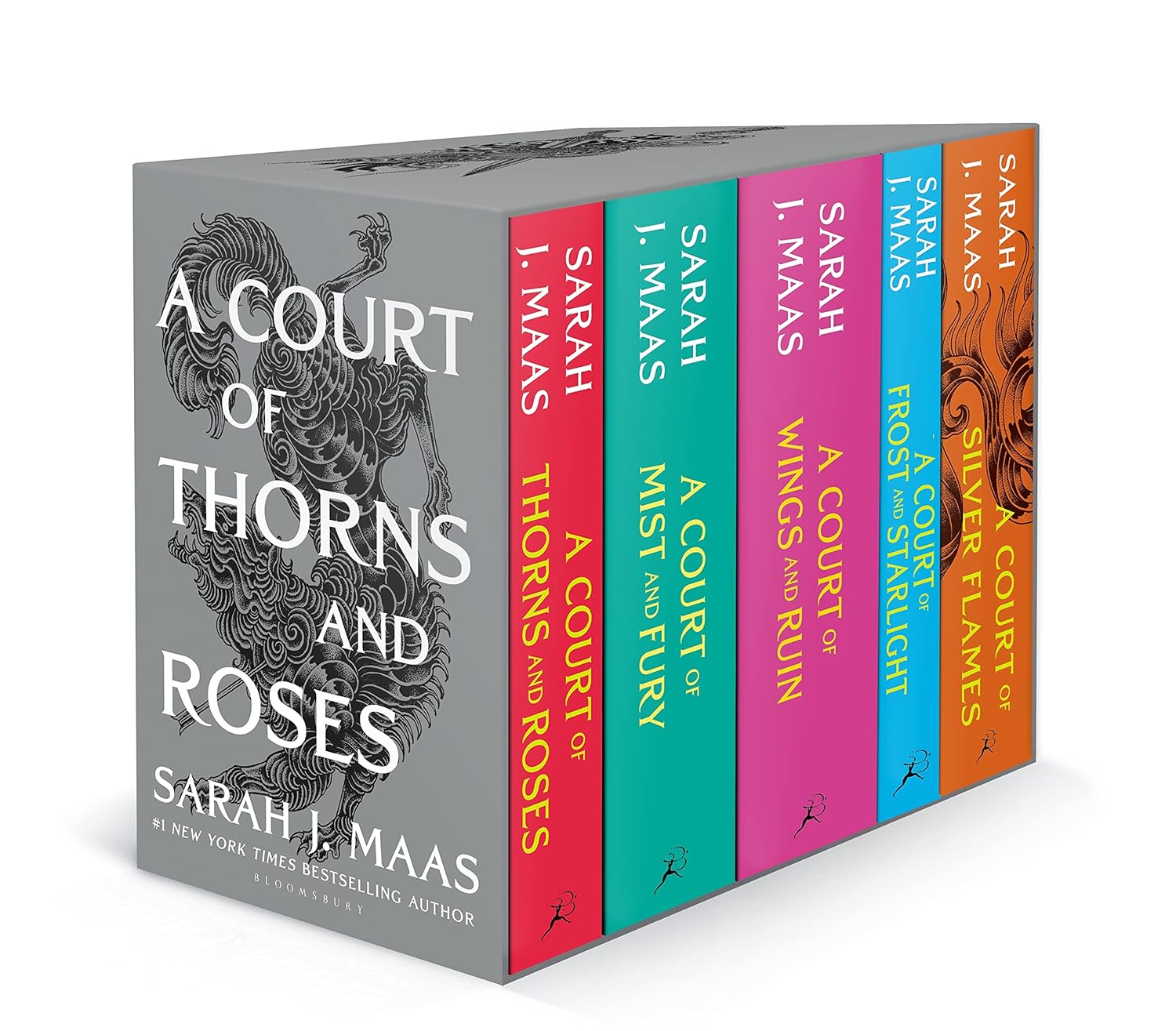
When the cardboard box with the recognizable logo of a smiling face came, it was a clear Saturday morning. A tiny twinge of remorse tore at me as I hefted the package inside and excitedly tore through the packing tape. I had another epic fantasy series to read when I had finished last month's stack of books I had subconsciously labeled as "enlightening."
Well, I thought, I can set those novels by Dostoyevsky and Woolf aside for a few days. After hearing my friends' raves about A Court of Thorns and Roses for years, the book's siren call became too strong to ignore.
Tucked up within was the complete five-book box set, with the exquisitely gothic images of Feyre, Rhysand, and their faerie companion on the covers of each paperback. The rich fantasy imagery of the books instantly took me back to my favorite reading spots in my teenage years, where I would spend endless hours cuddled up in big armchairs, happily unaware of the worlds that were dreaming into being all around me.
I felt a twinge of nostalgia as I realized that carefree weekend book binges were a thing of the past. It had been years since I'd allowed myself to immerse myself so thoroughly in fiction in between the day-to-day grind of adulthood. I made a pot of steaming chamomile tea and curled up with A Court of Thorns and Roses in the droopy corner of my lived-in sofa, determined to grab this moment before the creep of Sunday scaries.
The gauzily fairy tale atmosphere of the first few pages instantly engulfed me. The old, mysterious faerie kingdoms of Prythian appeared to breathe life into the paragraphs with Maas's ethereal prose, evoking the scent of morning mist and old forest brambles. An arcadian world where magic and peril were always present, and where even the sweetest descriptions hinted at hidden evil.
It was all too simple to get completely engrossed in the Gothic, melancholy charm of the story. I grudgingly parted to conduct weekend errands, but wisps of Feyre's voyage clung to me like sparkling ephemera. As I was doing the monotonous household chores like drying my hair, putting days-old, crusty dishes in the dishwasher, and replacing Rufus the cat's empty food bowl, my thoughts kept returning to the opalescent fugue state of the novel.
Even a fleeting view of the moss-grown thickets through rain-splattered windows was enough to momentarily unsettle my mind and send it reeling back into Maas's riddles. Who was the mysterious, seductive Rhysand really—a cunning manipulator or a selfless savior? Beneath the seemingly serene trees of the fairy worlds, what primordial ancient powers still shook? And why was it that the Night Court and its seductive, forbidden pleasures drew me in so strongly?
Every time I returned to the enticing raptures of the novel, the commonplace boundaries of linear time and Newtonian space blurred. I followed Feyre as her mortal footfall gradually awoke to the magic humming just beneath the surface of reality while I dragged the recycling bins out to the curb. The thunks of my knife as I chopped veggies for stir-fry mirrored the tribal war drums of the feared Bogge.
Maybe I shouldn't have been shocked by the book's uncannily captivating appeal. Ultimately, Sarah J. Maas has created her entire multimillion-selling business by transforming those dazzling glimpses of dark fantasy into pure literary bliss. As each chapter delves more into the sensuous and mystical, you can feel your own aura becoming less skeptical of tangible things and more in tune with her vividly fantastical storytelling imagination.
The most captivating aspect of the trilogy, though, was Maas's masterful blending of elemental suspense with scorching sexuality. And I realized why these books had created such a fervent cult of followers as A Court of Mist and Fury came into sharp focus towards the middle.
In spite of their highly detailed fantasy tales of faerie tales, the books' deep, primal emotions are driven by an intense, transcending desire for lust. Like, with six or seven 'y's jammed in there, deliriously, rapturously, all-consumingly hornyyy. Skin-flushing romantic deliverance and wonderfully pent-up sensual tension are evident on page after smoldering page.
I don't want to give away too much about the many, eh, private scenarios that follow, lest I ruin one of the best parts of the series. Let's just say that the pages burn themselves almost entirely to ash whenever Feyre and Rhysand's simmering chemistry reaches a crescendo. To put out those infrared embers of passion, you'll need the whole Ice Bucket Challenge cavalry.
Even though their chemistry is as intense as a supernova, it comes from a deep emotional core that is so real and realistic that you can't help but feel a kernel of connection for both characters. They are visceral hearts pulsating with equal parts sorrow and delight, not idealized ideals or sculpted statuary. By deftly arranging their wounds and conflicts, Maas humanizes them, giving their seductive physical representations even greater depth of meaning.
Regarding the overall narrative drive of the series, which goes beyond sensual raptures, I must admit that at times I became a little confused by the mythology. During the world-building info dumps, I would often lose myself in the moment, only regaining consciousness when the shady fae menagerie quarreled, plotted, or pushed their enticing physiologies against one another. These will just be referred to as...plot-adjacent diversions.
But the essential themes of the narrative—sisterhood, trauma, sacrifice, and the reclaiming of female identity in the face of institutional oppression—landed with resounding precision. So much so that I would often put the books down to wipe away stray tears and take short, cleansing breaths.
The arrival of the final volume in the tale, which is soul-shattering, was like a big bang inside my head. Ripping every emotional universe between exuberant rebirth and utter existential terror, completely leveling me in the process. To put it another way, I cried and shook uncontrollably for two hours straight before transforming into a newly-molted creature made of ash and quarry dust
I stumbled around for days in a trance-like state in the cathartic aftermath. I found myself staring out rain-splattered windows for a long time, engrossed in fantasies of gossamer faerie glamours flowing through the fog or invisible people lurking in dark tree branches. The sound of sirens became ethereal forest pipings, traffic patterns became fractal tapestries, and amid trash and graffitied alleyways, I had glimpses of veiled portals leading to green fae kingdoms.
Of course, these strange impressions would fade and flicker, but the ghostly afterimage lingered. Still, the siren sensations of rich, sinuous need burnt my meridians with a scorching faerie fever pitch. Partly ecstatic, partly eerie, and wholly unholy.
Thus, even if I eventually returned to the mundane world of Starbucks runs and office grinds, the entrancing raptures of the narrative continue to captivate me. Those prohibited places of glitz and nighttime grandeur always lurk just outside the edge of my awareness, constantly nudging the edges of my awareness with their otherworldly charms. Calling me back into their sensual, velvety swoon for eternity.
Maybe that's what makes Maas's stories so truly witchcraft - the way it threads its claws between the cracks in our elemental desires to awaken dormant desires for something more awe-inspiring, mystical, and scintillatingly sexual than we could have ever imagined. Because love charms are ultimately the most transformative spells in the novels—weaving enticing languages of intimate temptation that awaken our senses to lush, green hungers.
Wandering endlessly back into the seething depths of the literature, only to find themselves with unquenchable hungers. Tasty pangs that will only mature, ferment, and elicit even more spells of intoxication
Comments
Post a Comment